When to Stop Patching and Start Replacing
You can patch a cracked panel or two. But at some point, you’re putting Band-Aids on a bigger problem.
I’ve been called out to hundreds of San Antonio homes where homeowners kept repairing their siding instead of replacing it. They spent thousands on patches and paint, only to end up replacing everything anyway.
Here are the signs that tell you it’s time to stop fixing and start fresh.
1. Warping or Buckling Panels
Siding should lay flat against your walls. If panels are pulling away, buckling outward, or rippling, something’s wrong.
What causes it:
- Heat expansion (common with vinyl in San Antonio summers)
- Moisture trapped behind the siding
- Improper installation without expansion gaps
- Age-related material breakdown
A few warped panels might be replaceable. But if you’re seeing warping in multiple areas, the same conditions that damaged those panels are affecting the rest of your siding too.
Replacement is the fix.
2. Cracks or Holes in Multiple Areas
One crack from a hail impact? Repair it.
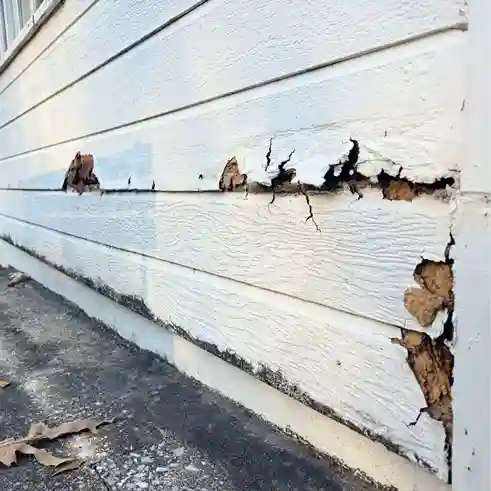
Cracks appearing in multiple panels across different walls? That’s material failure, not isolated damage.
Fiber cement and vinyl both become brittle with age. After 20+ years of expanding and contracting through Texas temperature swings, materials lose their flexibility. That’s when you start seeing cracks appear without obvious impact damage.
If more than 30% of your siding shows cracks, you’re past the point where repair makes financial sense.
3. Rot, Mold, or Fungus Behind the Siding
This is the big one. Surface mold on siding is ugly but fixable. Rot or mold on the sheathing behind your siding is a structural issue.
How to check: Tap on your siding with your knuckles. Solid siding over good sheathing sounds firm. Rotted areas sound hollow or soft.
If you push on siding and it gives way, you have rot. And if you have rot in one area, moisture has likely compromised other sections too.
Water intrusion behind siding leads to:
- Rotted wall sheathing
- Mold inside wall cavities
- Damaged insulation
- Structural wood deterioration
Patching the visible damage doesn’t fix the moisture problem that caused it. Full replacement with proper moisture barriers is the only real solution.
4. Rising Energy Bills
Your siding is part of your home’s insulation system. When it fails, your AC works harder.
Compare your summer electric bills from the last 3-4 years (accounting for rate increases). If usage is climbing without explanation, failing siding might be letting heat into your walls.
Common culprits:
- Gaps between panels allowing air infiltration
- Deteriorated insulation behind old siding
- Missing or damaged house wrap
New siding with proper insulation can cut cooling costs by 15-25% in San Antonio’s climate. If your bills are climbing and your siding is 20+ years old, replacement might pay for itself in energy savings over 7-10 years.
5. Paint Peeling or Bubbling Inside Your Home
This one surprises homeowners. Interior paint problems can point to exterior siding failure.
When siding fails, moisture gets into your walls. That moisture tries to escape, pushing through interior paint and causing it to bubble or peel.
If you’re seeing paint problems on exterior walls (especially near corners or around windows), check your siding on those same walls. You’ll often find cracks, gaps, or deterioration letting water in.
The fix isn’t repainting your interior walls. It’s replacing the siding that’s allowing moisture intrusion.
6. Siding is 20+ Years Old
Different materials have different lifespans:
- Vinyl siding: 20-25 years (less in extreme heat)
- Fiber cement: 50+ years
- Wood siding: 20-40 years depending on maintenance
- Aluminum siding: 25-40 years
If your vinyl siding is pushing 20 years, replacement is coming whether you see obvious damage or not. The material has been through hundreds of heat cycles and thousands of UV exposure hours. It’s becoming brittle and losing its protective qualities.
Plan for replacement before you start seeing failures. It’s cheaper than emergency replacement after water damage develops.
7. Widespread Fading or Color Loss
All siding fades over time. But extreme fading indicates UV damage that goes deeper than just aesthetics.
When siding fades dramatically:
- The protective coating is breaking down
- Material structure is becoming more brittle
- Weather resistance is compromised
San Antonio’s intense sun accelerates this process. South and west-facing walls fade faster than north-facing walls.
If your siding has faded so much that it looks like a different color than when installed, the material is past its prime. You can paint some siding types, but you’re still working with degraded material underneath.
Repair vs. Replace: The Real Math
Here’s the honest calculation:
Repair makes sense when:
- Damage is isolated to one area
- Siding is less than 15 years old
- Rest of siding is in good condition
- Repair cost is under $1,500
Replace makes sense when:
- Damage is widespread
- Siding is 20+ years old
- Energy bills are climbing
- Repair costs exceed $3,000
I’ve seen homeowners spend $5,000 on repairs over 3-4 years, then need full replacement anyway. That $5,000 could have gone toward new siding with a warranty.
What About Partial Replacement?
Sometimes you can replace one wall instead of the whole house. This works when:
- Damage is limited to one exposure (like a hail-damaged south wall)
- You can match the existing siding material and color
- The rest of your siding is less than 10 years old
But matching old siding is tough. Even if you find the same product, it won’t match your faded existing siding. You end up with a patchwork look.
Most contractors (including us) recommend whole-house replacement once you’re looking at replacing an entire wall.
Don’t Wait for Catastrophic Failure
The worst time to replace siding is after water damage has rotted your sheathing. At that point, you’re paying for:
- Siding removal
- Sheathing replacement
- Possible mold remediation
- New siding installation
That can double your project cost.
Replacing siding when you see warning signs - before structural damage develops - saves thousands.
Get a Professional Assessment
If you’re seeing any of these signs, get your siding inspected by a contractor who does both repairs and replacement.
A contractor who only does full replacements will always recommend replacement. A contractor who does both will give you an honest assessment of whether repair makes financial sense.
We inspect hundreds of San Antonio homes every year. We’ll tell you straight whether you need full replacement or if repair is still a reasonable option.
Worried about your siding? Schedule a free inspection or call (210) 880-0656. We’ll check for hidden damage and give you honest recommendations on repair versus replacement.
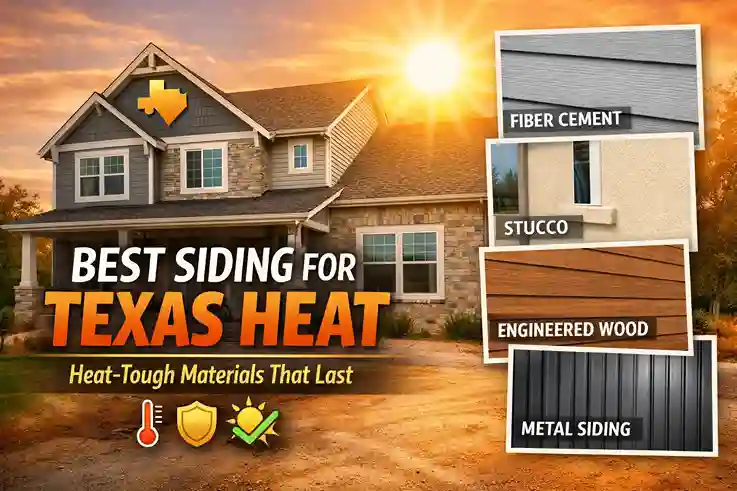
Not sure what material to replace your siding with? Read our guide on the best siding for Texas heat or learn about siding costs in San Antonio.